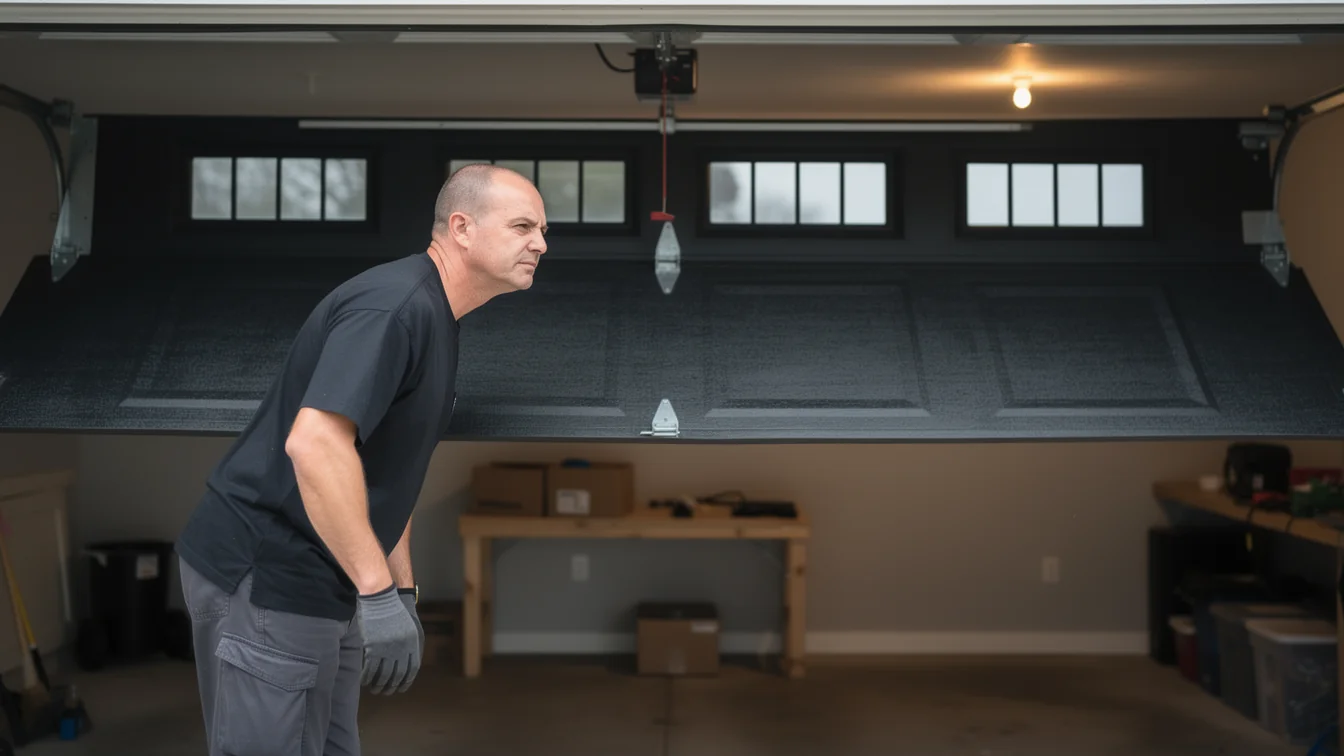
The Noises That Mean Something: A Rolling Meadows Guide
Rolling Meadows homes built mostly in the 1960s-70s and severe cold winters create specific door noises.
Read moreRolling Meadows homes built 1938-2009 mix attached and detached garages. Here's how that split changes door choice, cost, and cold-weather performance.
Local detail
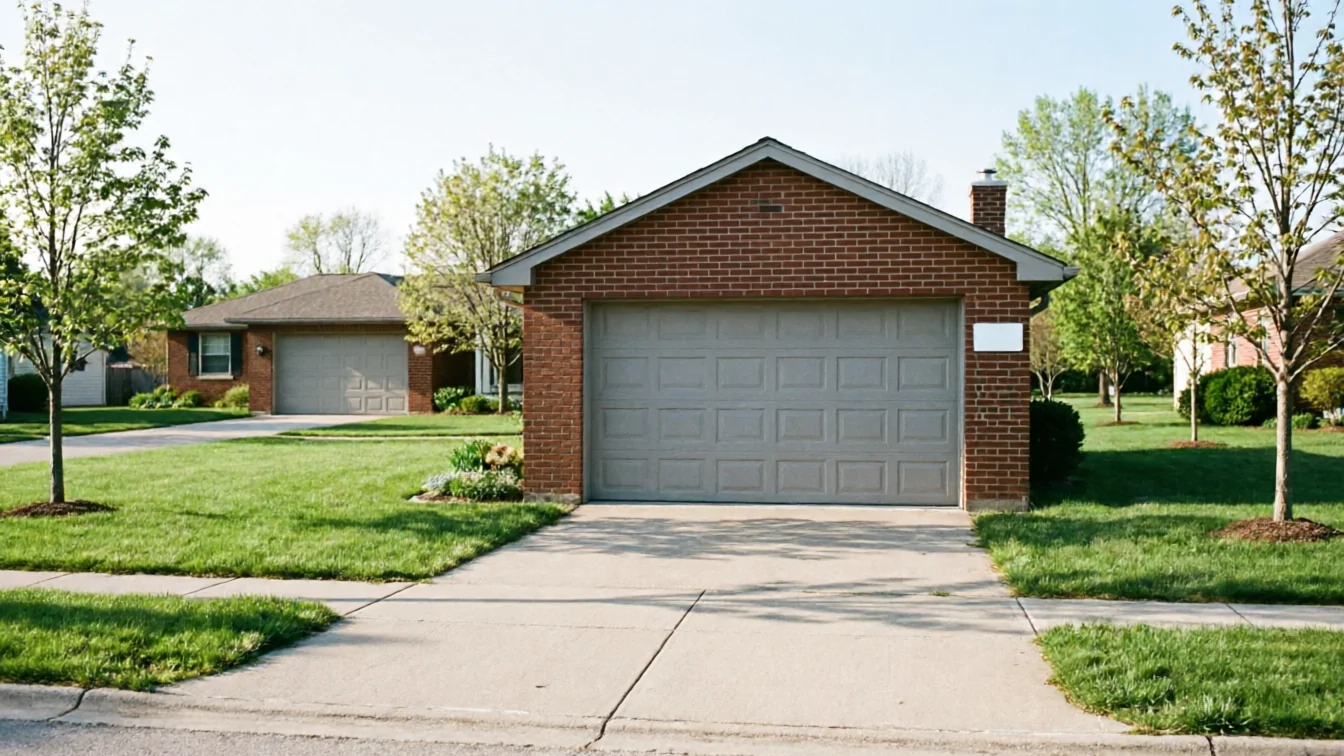
The number you get quoted depends more on garage type than most homeowners expect. A detached garage door usually stands alone - no shared wall, no HVAC duct running near it, so the install is simpler and the door itself can be a lighter-gauge steel section without a vapor barrier behind the drywall. An attached garage door, especially on the ranch and split-level homes that make up a lot of Rolling Meadows' 1960s-70s stock, often sits a few feet from a bedroom or laundry room wall. That changes the spec: you want a door with a real R-value rating and tight weatherstripping, because a thin single-layer door on an attached garage is pushing cold air straight into the house. We don't have a flat number to quote you here - sizes, track type, and whether the opener needs replacing all move the final figure. What we can tell you is that insulated steel costs more upfront than uninsulated, and on an attached garage that extra cost usually pays for itself in a lower heating bill over a few winters.
The area
Housing in the Rolling Meadows service area was built mostly between 1938 and 2009, with a median year of 1978, and the bulk of it falls into that 1960s-70s wave of construction common across the 77 named areas we work in. That era produced a lot of detached single-car garages set back from the house - original builds that never got an insulated door because nobody worried about it in 1968. As additions and second-car garages went up through the 70s and into the 80s, many of those detached structures either got converted to attached space or had a new attached garage built alongside the house. The result today is a real mix: original detached garages with old single-layer doors, and newer attached garages with doors that were sized and insulated for a different decade's standards. Knowing which one you have, and when it was likely added, tells us what we're actually working with before we talk about replacement or repair.
What we find
This area sits in a cold, severe climate band, and that hits attached and detached garages differently. A detached garage has no heat source at all - it tracks outdoor temperature closely, which means torsion springs lose tension faster in deep cold, nylon rollers stiffen, and openers strain harder to lift a door that's lost some of its spring balance. An attached garage usually runs a little warmer because it borrows heat from the house through the shared wall, but that's exactly the problem: if the door isn't insulated and sealed, that warmth leaks out through the garage and your furnace runs longer to make up for it. Condensation is the other issue on attached garages - the temperature swing between the warm wall and a cold steel door can sweat enough moisture to rust hardware over a few winters. Detached doors don't get that condensation problem nearly as often, since there's no warm wall feeding moisture into the air next to them.
How we work
The mistake we see most often is treating every door the same way regardless of which kind of garage it's on. Someone replaces a detached garage door with the cheapest uninsulated panel because 'it's just a garage,' which is fine until the springs are working overtime in a severe cold snap with no heat buffer at all. The opposite mistake happens on attached garages - a homeowner upgrades the door but leaves the old weatherstripping and a thin threshold seal in place, so the insulated panel still lets cold air leak around the edges. Either way, you've spent money without fixing the actual problem. The honest limitation here: we can't tell you which mistake applies to your door without seeing it. A phone description of 'it's drafty' could mean the door, the seal, the opener, or the wall behind it, and guessing at a fix over the phone usually costs more than just having someone look at it once.
Questions
Not for comfort, but it still matters for the hardware. In a cold, severe climate, an uninsulated door on an unheated detached garage means the springs, rollers, and opener are all dealing with full outdoor temperature swings every day. Insulated doors are a bit heavier and better sealed, which eases strain on that hardware even without a heat source behind it.
That's condensation from the temperature gap between the warm shared wall and a cold steel door panel - common on attached garages in this climate band. It usually means the door lacks enough insulation or the seals have gaps letting humid house air in. Left alone, it corrodes hardware over time.
Possibly, if it's a detached single-car garage, since a lot of that era's stock in Rolling Meadows went up between 1938 and 2009 with a median build year of 1978. If you've never replaced springs or weatherstripping, it's worth having the door checked rather than assuming it still performs the way it did new.
Recommendation
More garage door guides for Rolling Meadows homeowners.
Rolling Meadows homes built mostly in the 1960s-70s and severe cold winters create specific door noises.
Read more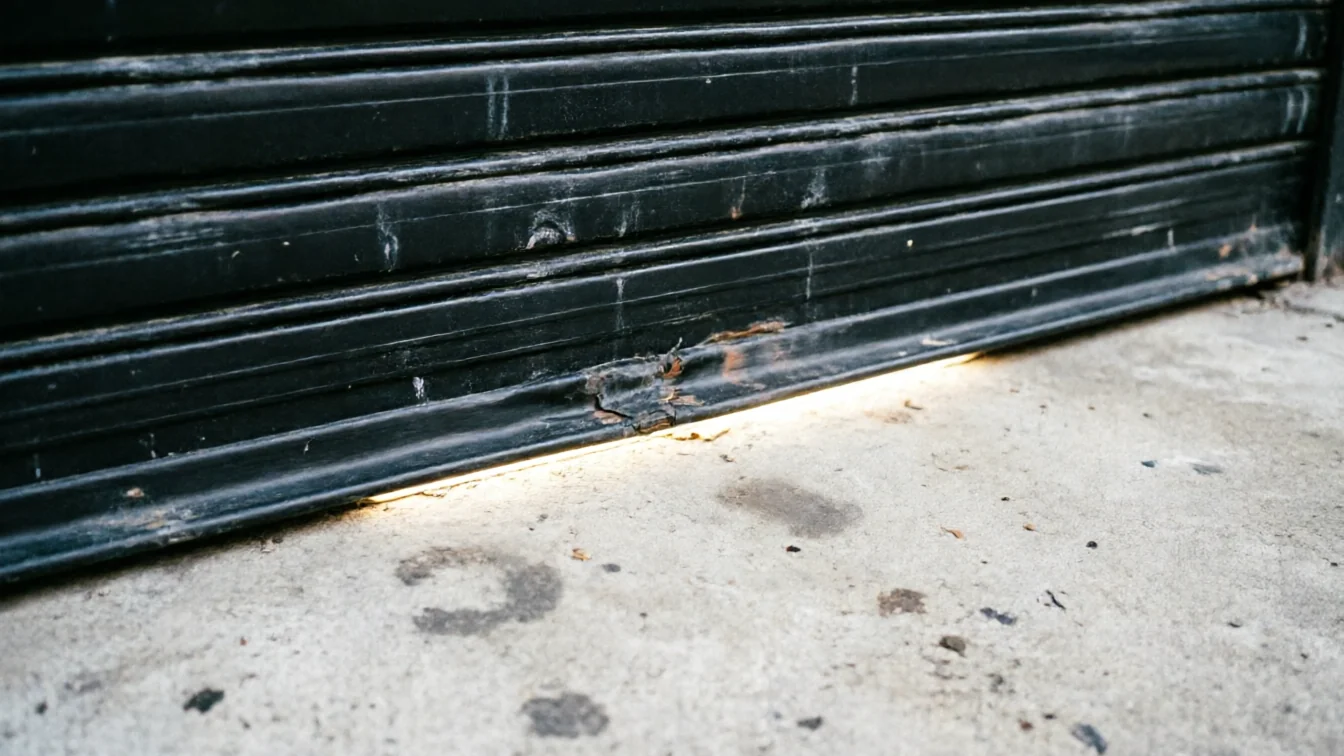
Rolling Meadows homes from the 1960s and 70s leak heat fast through worn garage door seals.
Read more
Rolling Meadows homes built in the 1960s-70s often carry wide double doors without bracing for cold-climate wind.
Read moreReady when you are
Rolling Meadows Garage Door Pros repairs and installs garage doors, springs and openers in Rolling Meadows, IL and the surrounding area.