What Garage Doors Looked Like Before Insulation Rules in Rolling Meadows
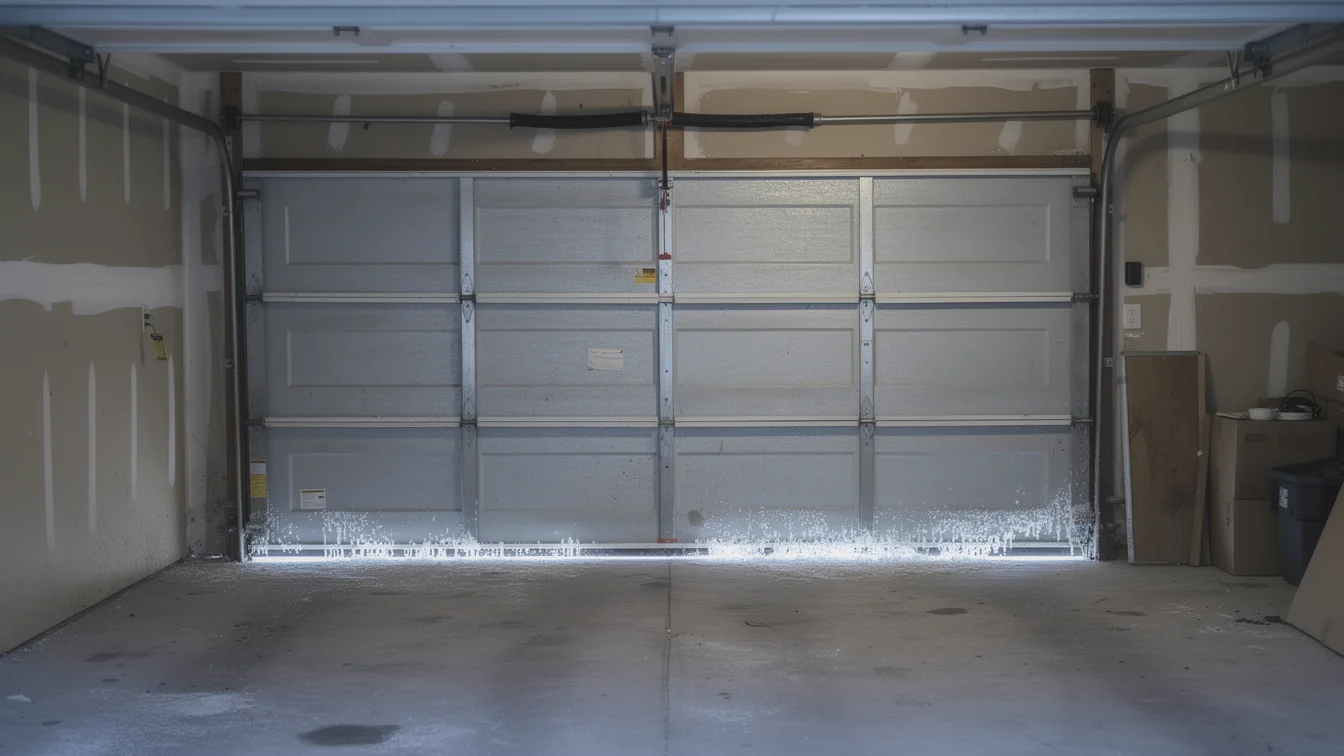
Rolling Meadows homes built before 1978 often have garage doors with no insulation.
Read moreRolling Meadows homes built in the 1960s-70s often carry wide double doors without bracing for cold-climate wind. Here's what that means for your door.
Local detail
We don't have a flat number to hand you here, because what a wide door needs depends entirely on what's behind the panel - the track gauge, whether a center strut was ever installed, and how far the hardware has already racked out of square. A single bent track on one side costs less to fix than two tracks pulled loose from the jamb, and those are different jobs even on the same width door.
What we can tell you is what drives the number up or down: age of the track, whether the door is a true double-wide or two singles mounted close together, and how much the wind has already done before anyone calls. A door that's been bowing in and snapping back for a season usually needs more than a strut kit - it needs the jamb checked too.
If you want an exact figure, that's a phone call and a look at the door, not something we'll guess at in writing. We'd rather tell you we don't know than hand you a number that doesn't match what we find in your garage.
The area
Rolling Meadows housing runs mostly from the late 1950s through the 1970s, part of a wider wave of construction across this corner of the Northwest suburbs built between 1938 and 2009, median year 1978. Ranches and split-levels from that stretch were built with attached two-car garages and a single wide opening rather than two narrow single doors - 16 feet of door hung on one track system, sometimes with no center support beam at all.
That was standard for the era. Nobody was building to resist sustained wind load on a door that size; they were building to code that didn't ask for it yet. So a lot of these original wide doors, or their direct replacements, are still running on hardware sized for a calmer expectation than what the door actually faces every winter.
We see this pattern across the area we work in too - towns like Itasca, Roselle, and Wood Dale within a few miles share the same construction era and the same exposure, which is why the same wide-door problem shows up on service calls in more than one zip code. It's not a Rolling Meadows-only quirk, but it is a Rolling Meadows-common one, because of when this housing went up.
What we find
Rolling Meadows sits in a cold-climate band rated severe, which means winter wind isn't an occasional gust - it's sustained pressure that leans on a door for hours at a time, not seconds. A wide door, 16 feet across, has a lot more surface for that pressure to push against than a single 9-foot panel, and a lot more distance for the middle of the door to flex before the edges catch up.
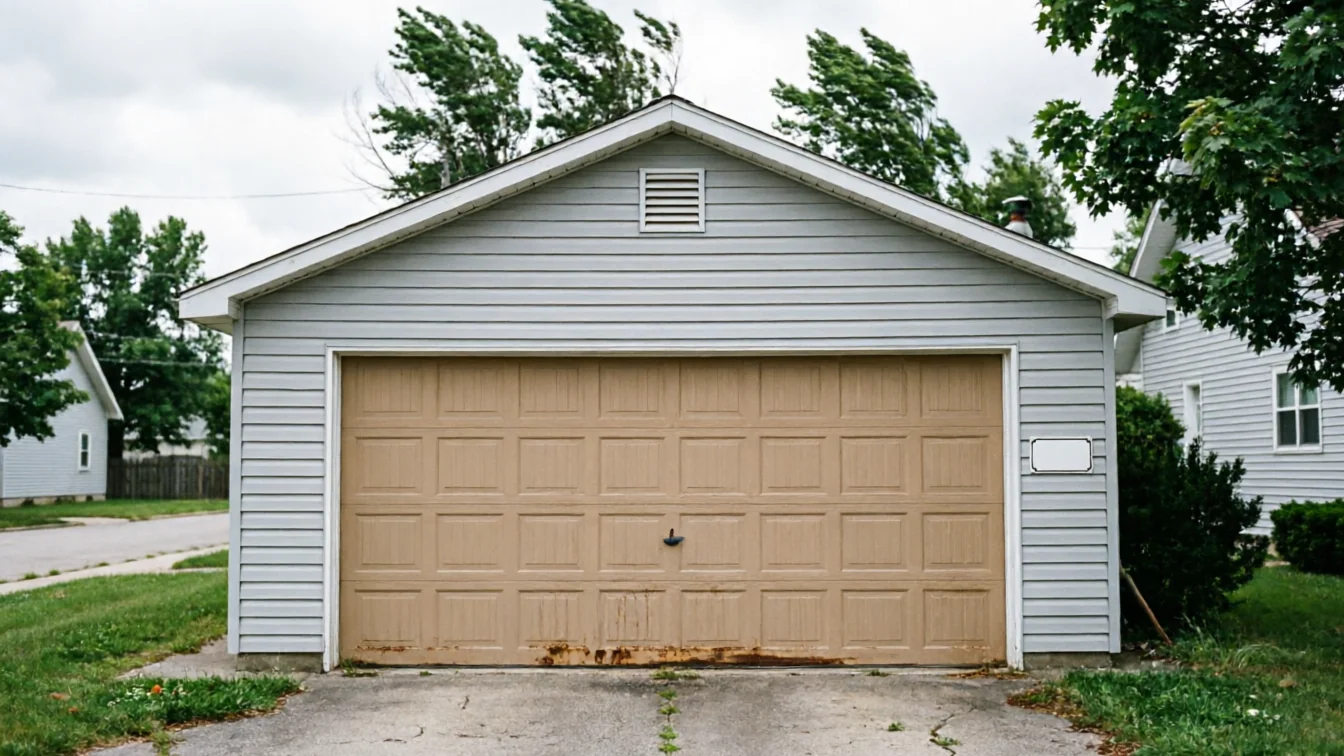
On a double-wide door without a center strut, that flex shows up as bowing - you'll see daylight at the middle of the door when the wind is up, even with it fully closed. Keep that cycle going through enough cold-season wind events and the rollers start walking out of the track, the hinges stretch, and eventually a panel seam cracks from repeated flexing it was never braced to handle.
It's not storm damage in the dramatic sense - no tree through the roof, no single event you'd remember. It's cumulative. The door that looks fine in August can be two winters away from a cable popping loose, because nothing about a calm summer day told you the track was already working loose.
How we work
The mistake we see most is replacing a wide door with another wide door at the same spec, because that's what fits the opening and the quote looked simple. If the original problem was a 16-foot door with no center strut on an opening built in the 1960s or 70s, putting in a new door the same way just resets the clock on the same failure.
The other mistake is bracing one side and assuming that's the fix. A strut kit on the bottom two panels helps, but if the track itself is original and already slightly bowed from years of wind flex, the new hardware is fighting an old problem. We'll tell a homeowner straight when a track needs replacing alongside the strut - doing one without the other is spending money twice.
And sometimes the honest answer is that a wide single door, given the age of the opening and the wind exposure, is a worse long-term choice than converting to two narrower doors - that's a bigger job and not one we'd push on everyone, but for a door that's already failed twice, it's worth putting on the table.
Questions
On a wide door - 16 feet across is typical for Rolling Meadows ranches - the center of the door flexes more than the edges under sustained wind pressure. Without a center strut reinforcing that span, you'll see the middle bow inward and pull back as gusts come and go. It's a bracing issue, not a sign the door is failing outright, but left alone it stresses the track and hinges over time.
Most doors from that era in Rolling Meadows were built to the standards of the time, which didn't account for sustained severe-cold wind load the way current bracing does. A lot of original wide doors are still running without a center strut. It's not automatically a problem, but it's worth having someone check the track and hardware before a hard winter, not after.
Depends on how far the track has already shifted. If it's still square and just missing a strut, bracing is the cheaper fix. If the track's bowed or the rollers have walked out more than once already, a new door - sometimes converted to two narrower doors - holds up better long-term. We'd rather look at it than guess over the phone.
Recommendation
More garage door guides for Rolling Meadows homeowners.
Rolling Meadows homes built before 1978 often have garage doors with no insulation.
Read more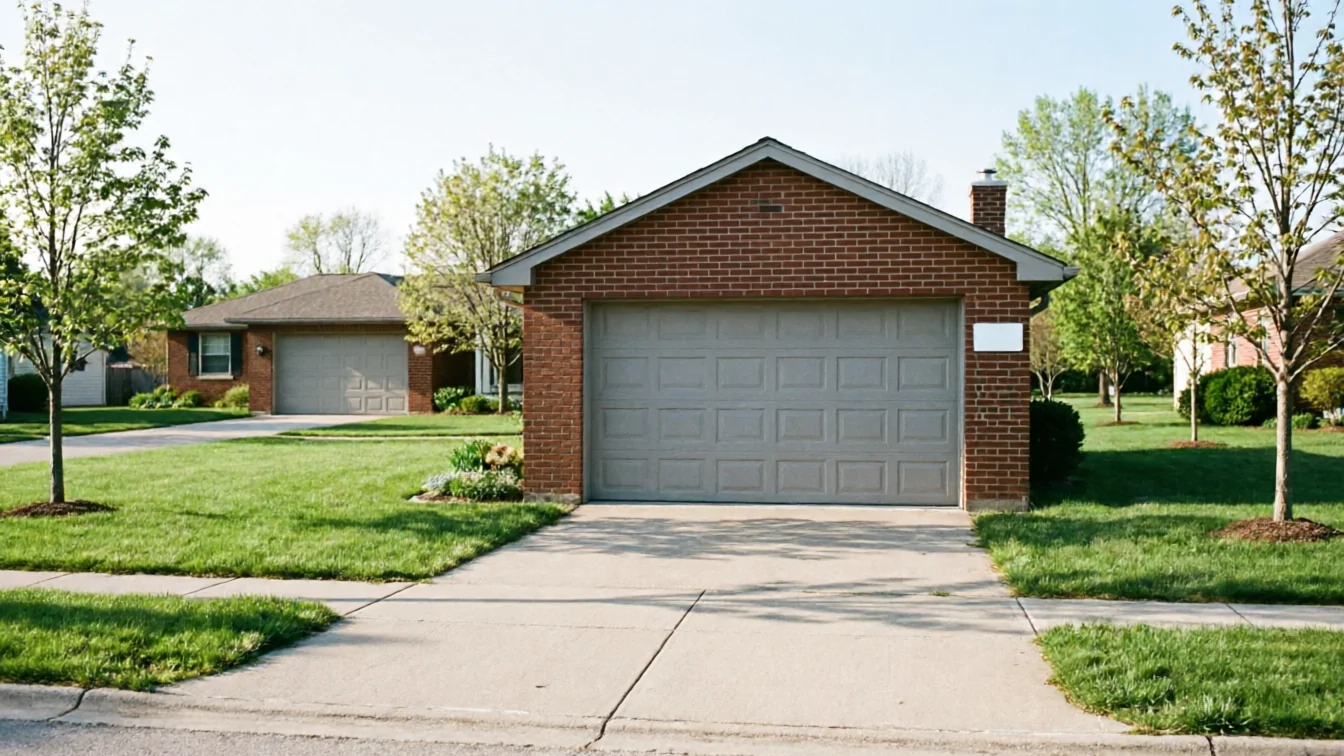
Rolling Meadows homes built 1938-2009 mix attached and detached garages.
Read more
Rolling Meadows homes built mostly in the 1960s-70s and severe cold winters create specific door noises.
Read moreReady when you are
Rolling Meadows Garage Door Pros repairs and installs garage doors, springs and openers in Rolling Meadows, IL and the surrounding area.