Libertyville, Rolling Meadows
Emergency Garage Door Repair for Libertyville Homes
Garage doors in Libertyville, IL mostly date to the mid-1970s, which means extension-spring hardware. Here's what breaks, what it costs, and how the fix works.
Popular Services
The Symptom
The typical house in Libertyville went up around 1976. That year matters more than it sounds like it should, because it tells you what's hanging over your car right now.
Extension springs in 1970s
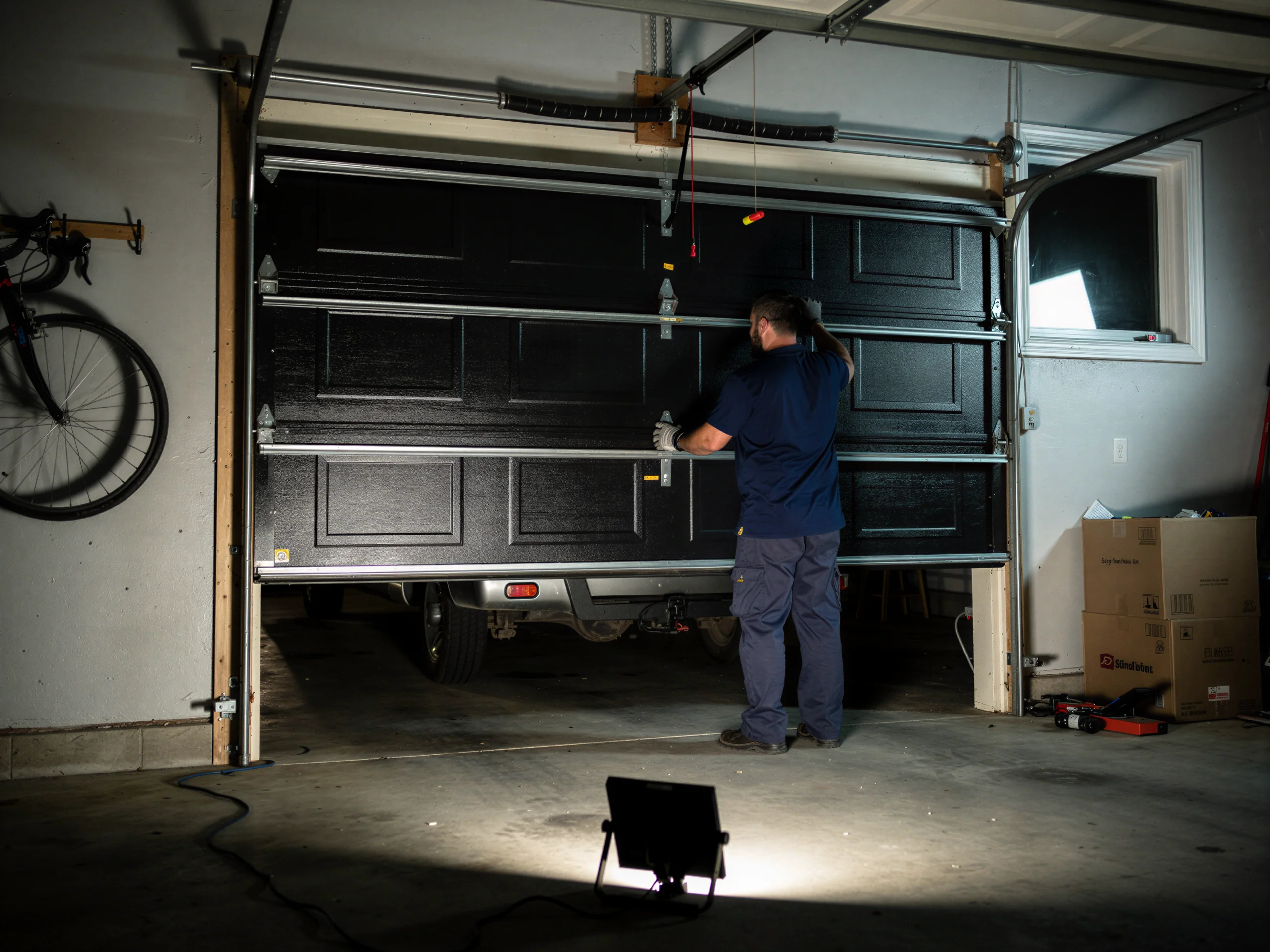
Builders in the mid-70s were still running extension springs on steel tracks, not the torsion bars that became standard later - a horizontal spring on each side of the door, stretching and snapping back every time the door moves.
Spring fatigue and failure
Forty-some years of that cycle wears the spring steel thin, and when it finally lets go, it goes loud: a crack, then a door that either won't budge or drops fast and uneven.
Uneven weight warning
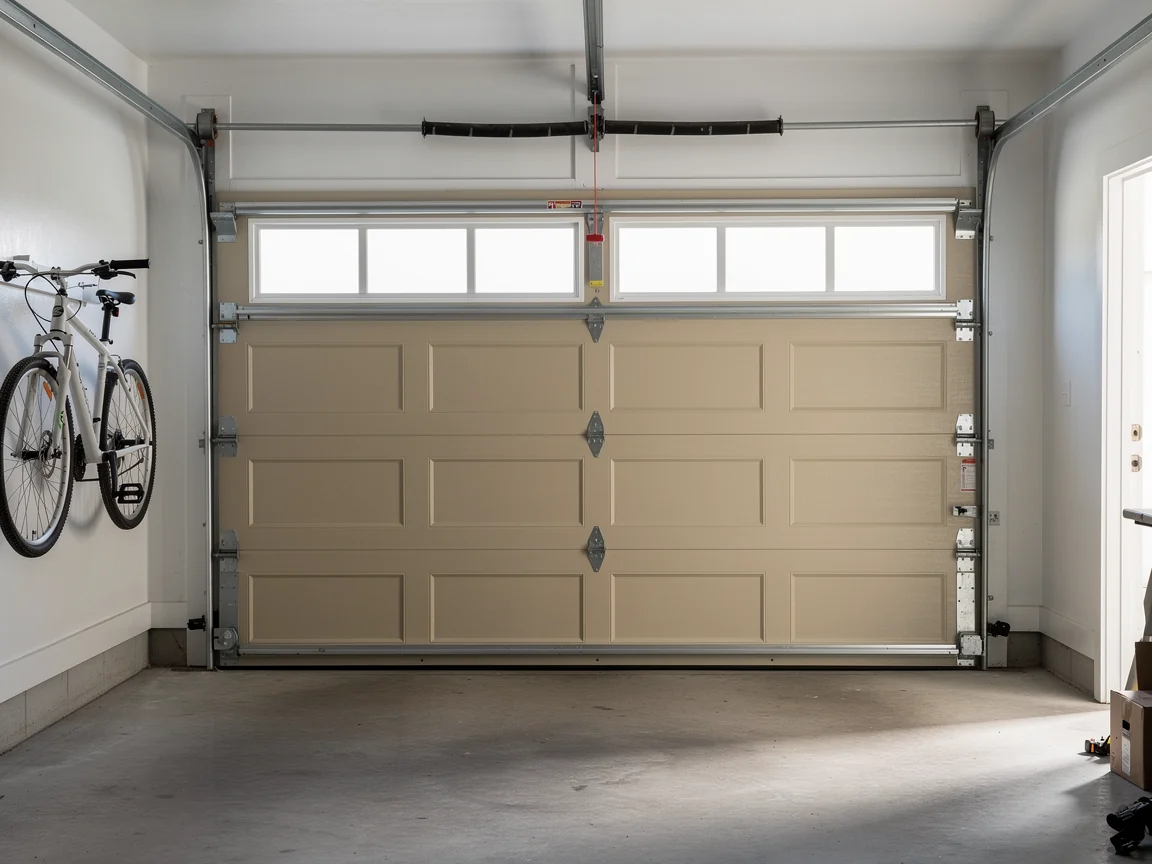
If your door feels heavier on one side than the other, or the cable on one track looks loose and frayed, that's the original-era hardware telling you it's near the end. It's not a flaw in the house. It's just what was standard the year your garage was framed, and nobody's replaced it since.
What You Pay
We don't have a flat price sheet to quote you here, and we're not going to make one up. What we can tell you is what drives the number: whether it's a spring swap on original extension hardware or a full torsion conversion, whether the opener motor is original or already replaced, and whether one panel is cracked or the whole door needs to come down. Libertyville's median household income runs well above the rest of our service area - north of $162,000 against roughly $113,000 across the territory as a whole - and in practice that means more owners here skip the patch and go straight to a full torsion replacement rather than keep feeding an aging extension system. Neither choice is wrong. A patched spring on 1970s hardware can run another several years; a torsion conversion costs more up front and needs less attention going forward. We'll tell you which one makes sense for your door once we're looking at it, not before.
How Long You Are Without the Door
We run this call from Rolling Meadows, and Libertyville sits about 15 miles out. That's real drive time, and we're not going to promise a response window on this page that we can't back up once you're the one standing in the driveway. What we can say is that a broken spring doesn't usually mean a door stuck wide open to the weather - most fail with the door down, which buys you time to wait for the truck without the garage sitting exposed. If the door is stuck up, or the opener's run the carriage off the end of the track, that changes the urgency and we'll say so when you call. The honest version: farther towns in our territory get a longer wait than towns right around Rolling Meadows, and Libertyville is one of the farther ones.
Where This Job Goes Sideways
The extension-spring doors common in Libertyville's 1976-era housing stock have a specific failure chain, and it's rarely just the spring. The pulleys those cables run over corrode from the inside, so a cable can look fine and still be seconds from fraying through under tension.
Cold-season spring snaps
Severe cold makes this worse - our region sits in a cold-severe climate band, and a spring that's been quietly weakening all year is far more likely to snap on the first hard freeze than in July.
Partial DIY spring swaps
We've also seen owners replace the spring themselves and leave the original pulley and cable in place, which just moves the failure point down the line by a season or two.
Thin original steel skin
The other place this goes wrong: a door original to a 1976 build often has a steel skin that's thinner than what's sold today, so a cracked panel from an impact can't always be patched - the replacement panel from a current manufacturer may not match the old track spacing, and the whole door ends up getting swapped anyway.
How We Fix It
On original extension-spring doors we check the full chain before touching the spring itself: pulleys, cable ends, the track alignment, and whether the drum at each end is still seated right.
Replacing spring pairs together
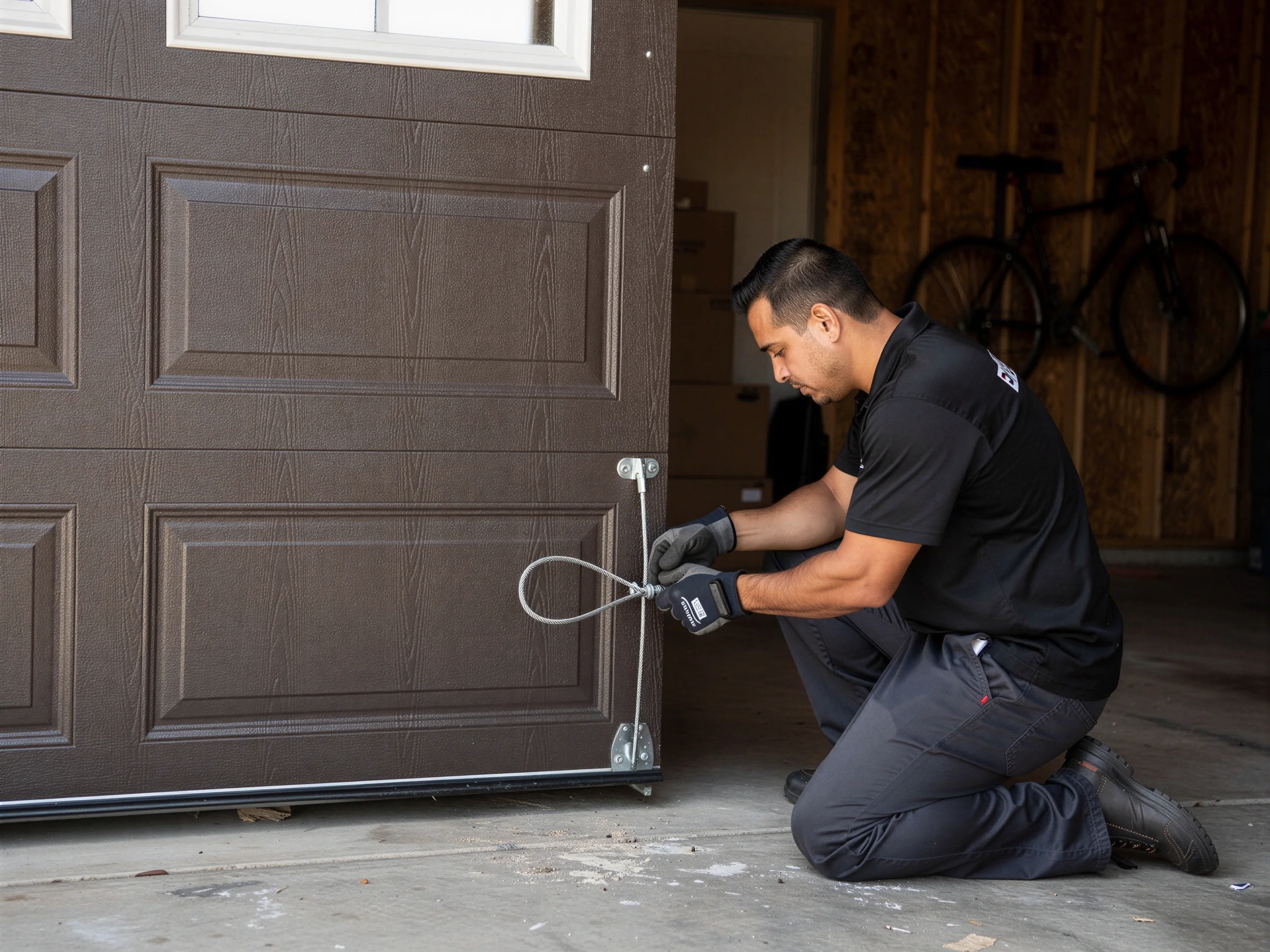
If the spring's gone but the rest of the hardware is sound, we replace the spring pair and the cables as a set - not just the one that broke, since the other side is the same age and under the same load.
Torsion conversion option
If you're ready to move off extension springs entirely, a torsion conversion puts the spring on a shaft above the door instead of stretched along the track, which holds up better through repeated cold-weather cycling.
Balancing before departure
Either way, we balance the door before we leave, because an unbalanced door is what burns out the opener motor next. One limitation worth saying plainly: if the door itself is warped or the panel seams have separated, we'll tell you replacement beats repair rather than bill you for a fix that won't hold.
Parts We Carry
We stock the extension springs and cable sets sized for the hardware common on doors from this era, along with the pulleys and drums that wear out alongside them. We also carry torsion springs and shafts for owners converting off the original system, plus standard roller and track hardware. What we don't carry on the truck is a custom panel match for an older door whose track spacing doesn't line up with current manufacturer sizing - that's a special order, and we'll say so up front rather than have you wait on a part that isn't coming today.
Questions
Common questions
Why does my garage door still have the old spring-on-the-side setup instead of the kind above the door?
Houses built around Libertyville's 1976 median typically went up with extension springs stretched along the horizontal track, which was standard then. Torsion springs mounted on a shaft above the door became common later. If your garage hasn't had major hardware work since it was built, you're likely still running the original extension system.
How fast can someone get to Libertyville from Rolling Meadows?
We run this call from Rolling Meadows, roughly 15 miles away, so we won't quote a response time on this page that doesn't hold up once you're waiting. Drive time is longer here than for towns closer to our base, and we'll give you a real estimate when you call, not a canned one.
Is it worth replacing the whole door instead of just fixing the spring?
Depends on the door. If the panels and track are sound, a spring and cable replacement is usually the cheaper, faster call. If the steel is cracked or the track spacing is from an older, now-discontinued standard, a replacement panel may not match and a full door swap ends up being the more practical fix.
Explore more
More Services in Libertyville
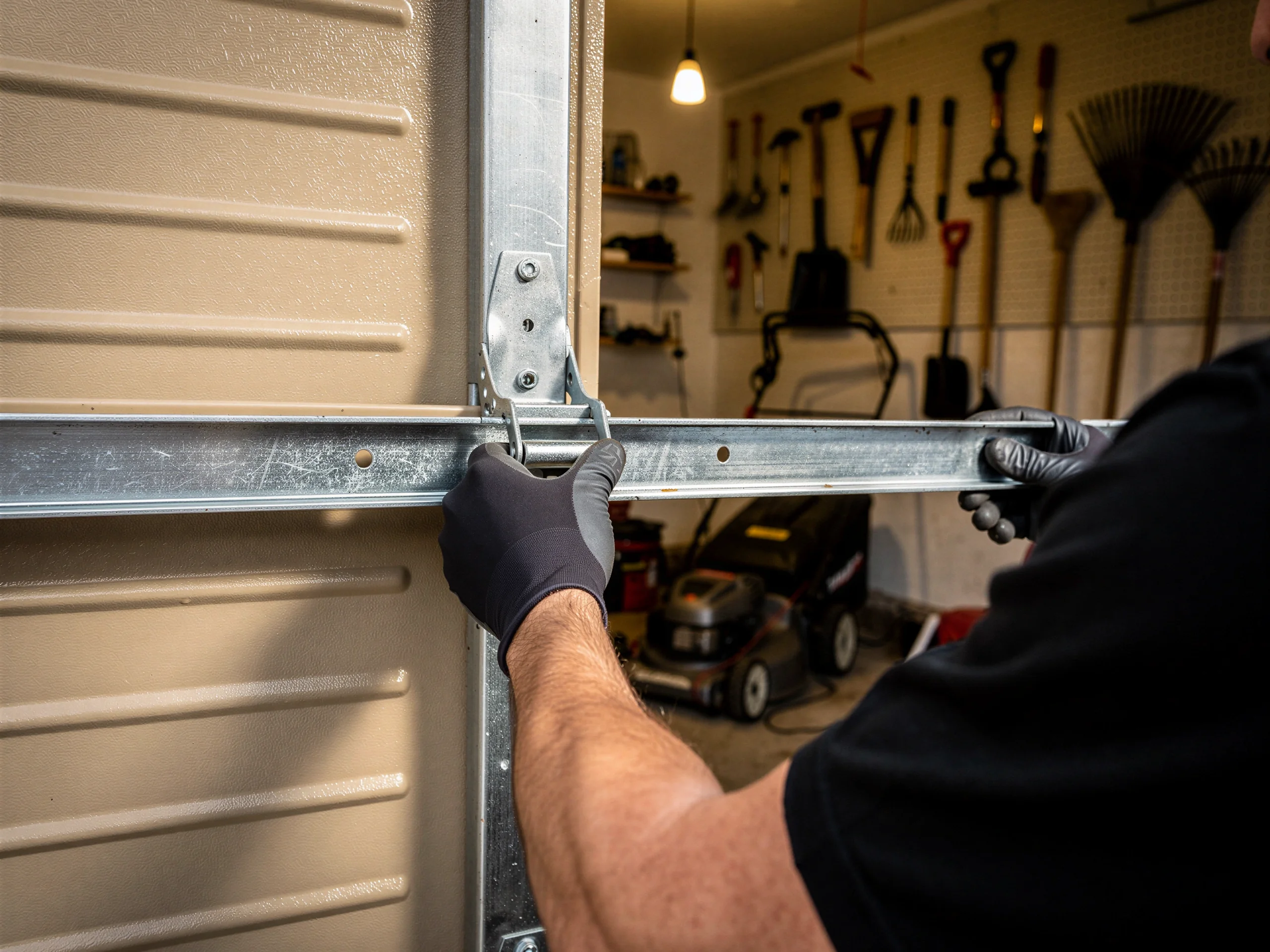
Garage Door Repair
Libertyville's typical home dates to 1976, right in the middle of the area's extension-spring era. Learn more →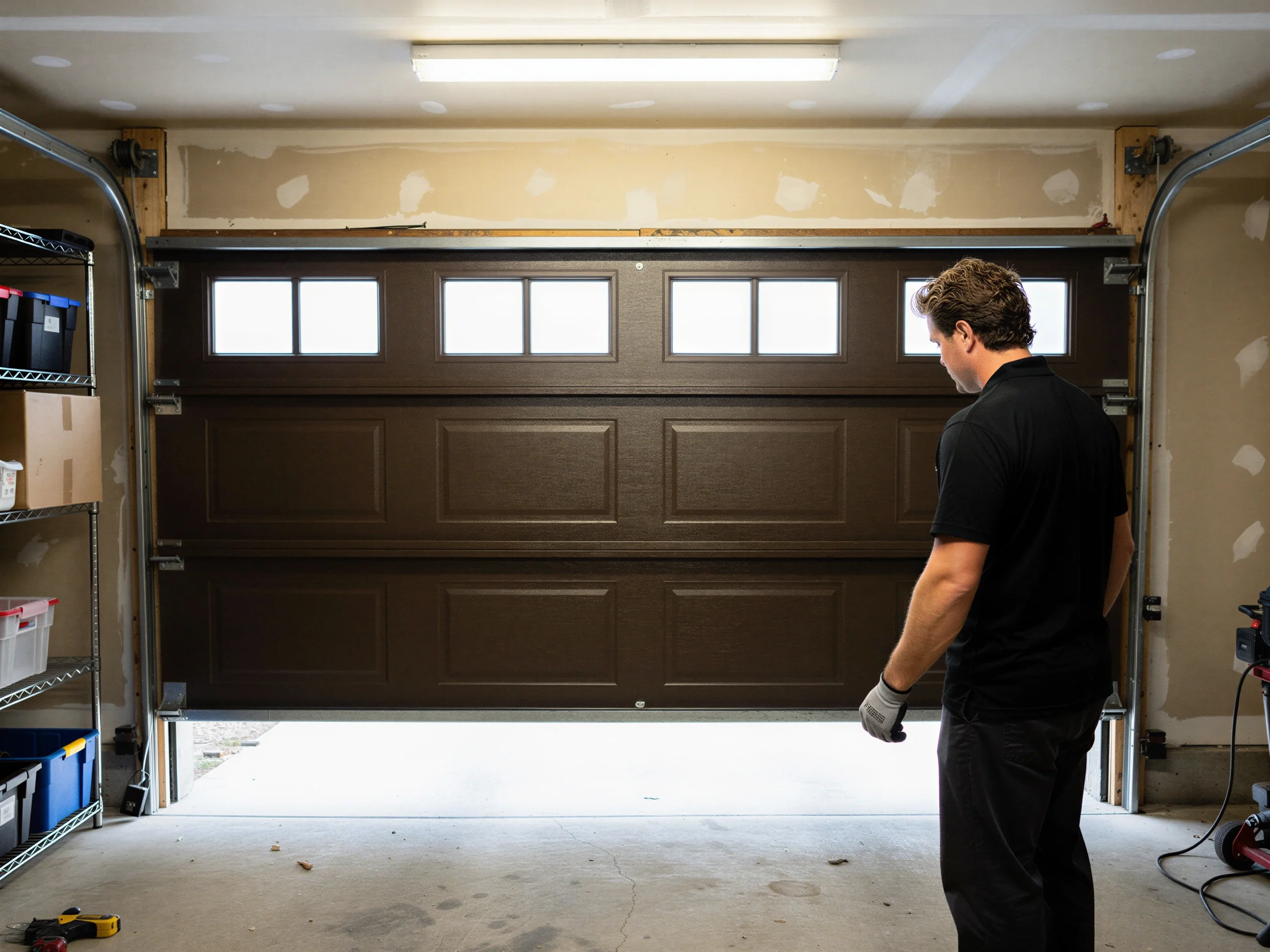
Garage Door Service
Most Libertyville houses date to the mid-1970s, with springs and openers rated for Chicago-area cold due for replacement. Learn more →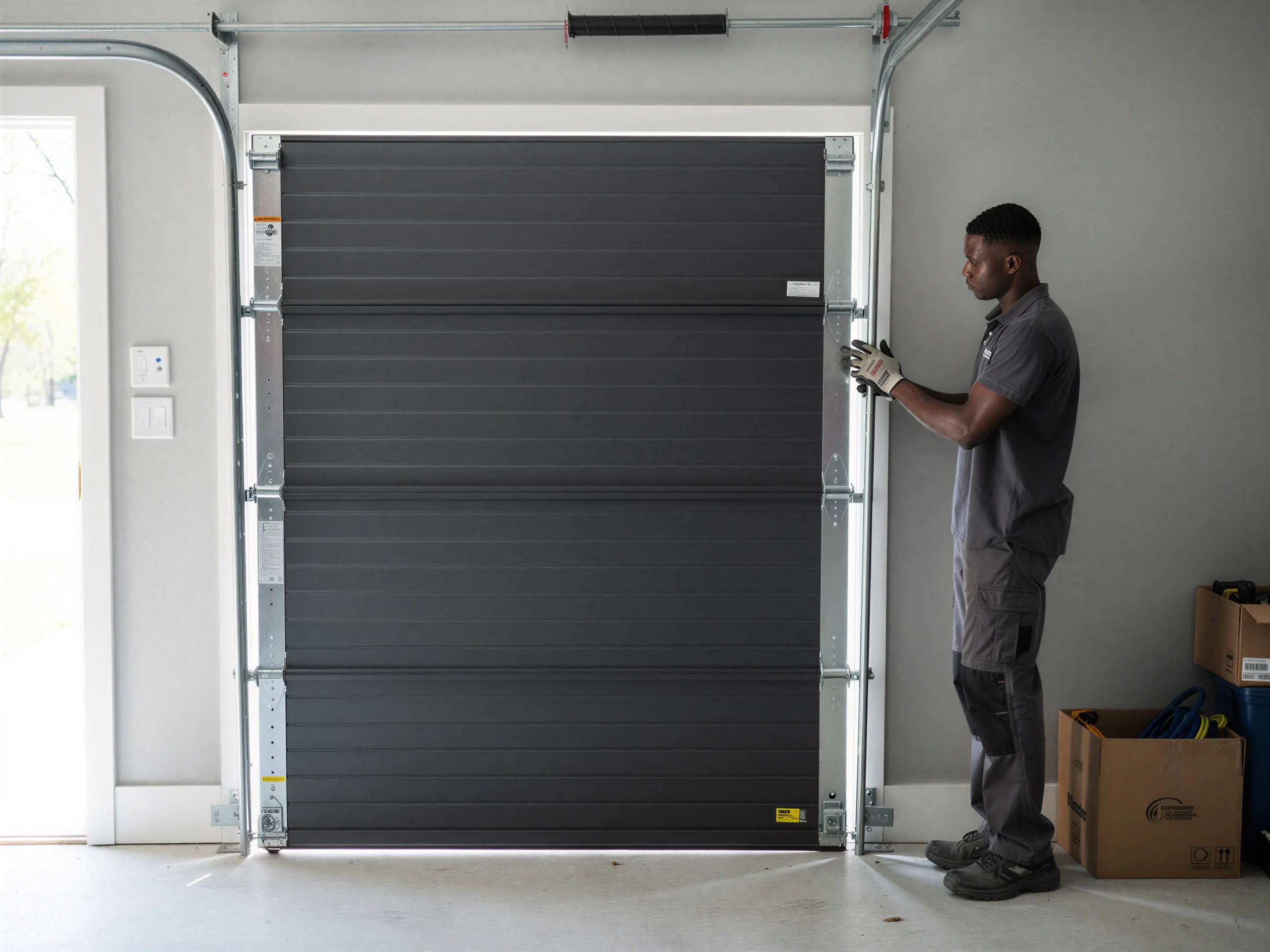
New Door Installation
Most Libertyville homes date to the mid-1970s and still carry original torsion hardware. Learn more →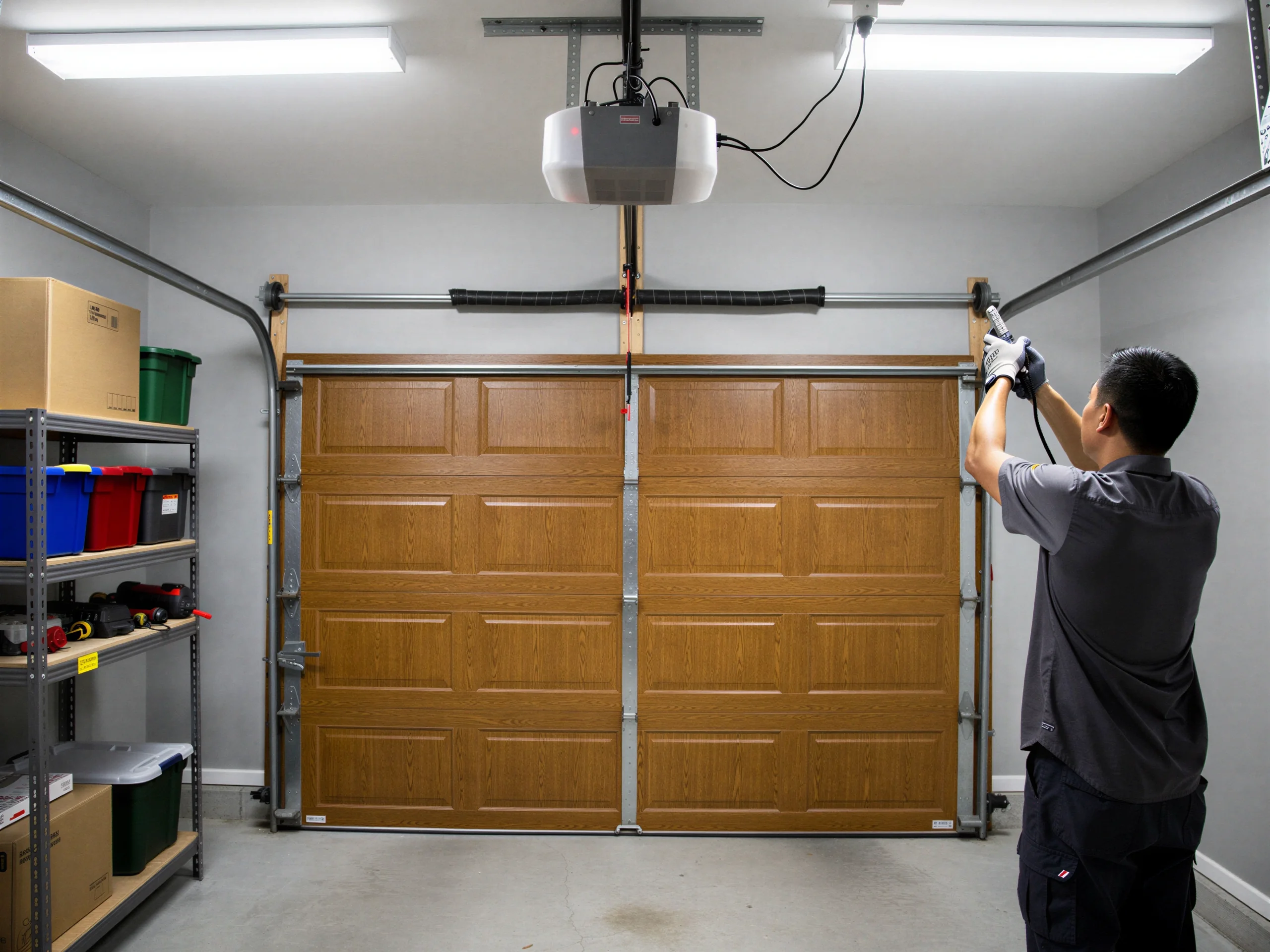
Opener Installation
Opener installs in Libertyville, run from our Rolling Meadows base 15 miles out. Learn more →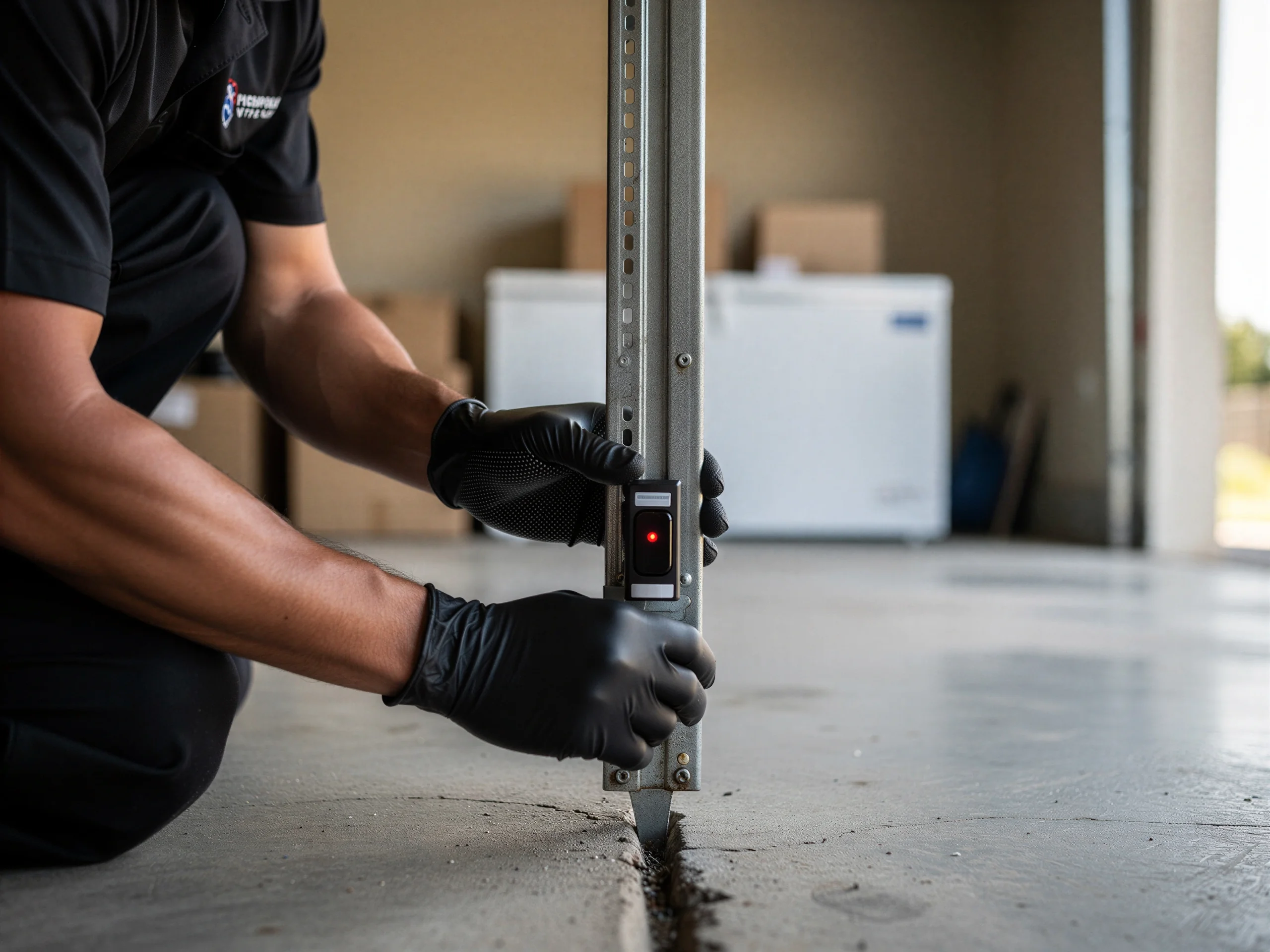
Opener Repair
Opener repair for Libertyville's mid-1970s houses, serviced from Rolling Meadows, 15 miles out. Learn more →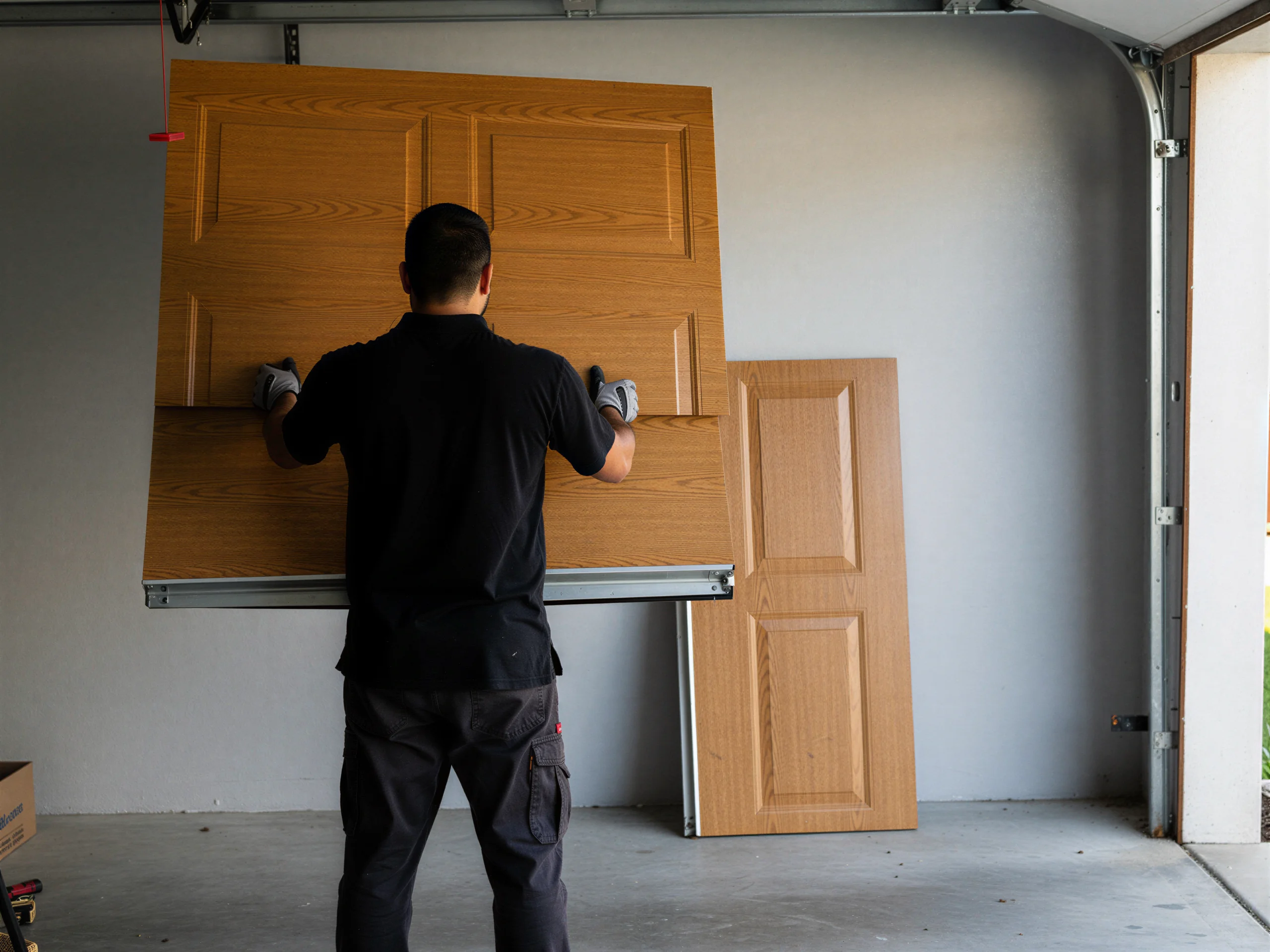
Panel Replacement
Panel replacement for Libertyville homes built around 1976, matched against the income level and door age that decide whether a panel swap or a full door makes sense. Learn more →Ready when you are
Garage door emergency in Libertyville?
Rolling Meadows Garage Door Pros repairs and installs garage doors, springs and openers in Rolling Meadows, IL and the surrounding area.